Insights · AI governance · Strategy
Apophasis and Apophis: Governing the AI Twin Before Impact
Two words a single letter apart hold the whole AI-governance question. Apophasis is the art of naming a thing by refusing to name it. Apophis is the asteroid we learned to track, measure, and steer around. A leader building an AI Twin has to choose which one describes their strategy.
Two near-twin words, one strategic fork
Apophasis is a rhetorical move: “I won’t even mention the thing I’m not supposed to mention” — and in saying so, you mention it. As a governance posture it is the quiet temptation to handle a risk by looking away from it, drafting a list of what must never be said, and trusting silence to do the work. It rarely does. Apophis — the near-Earth asteroid named for an old god of chaos — is the opposite story. For a while it looked like a possible impact. Scientists responded not by avoiding the subject but by studying it relentlessly: watching, measuring, refining the orbit until they could say with confidence where it would and would not go. The dread became a managed flyby. They governed the risk by naming it.
The irony sits right in the resemblance. An AI Twin done carelessly is itself a small Apophis — an impact risk circling your professional, personal, and reputational standing. And the worst way to govern it is by apophasis: a private blacklist of forbidden words and a hope that nothing slips. (My CFO desk wrote about exactly that failure mode in Apophasis, the Streisand Effect, and the Guardian Angel.) Good governance does what the astronomers did: it states its boundaries plainly and watches the path continuously.
Your AI Twin is an interface — so it can cross a line in your name
As work automates, more of how you meet the world runs through agents acting for you. Your AI Twin becomes the interface — the face the world meets first. That is leverage, but it is also exposure: whatever speaks in your name can also overstep in your name. An interface that acts fast but can’t tell where your authority ends will, eventually, give advice you’re not licensed to give, claim a credential you don’t hold, or make a claim you can’t defend. The strategic answer is an AI Compliant Twin — one whose reach is matched by restraint.
And it is not only your Twin in the room. As avatars come online, they increasingly interact with other people’s avatars — machines wearing faces, negotiating, representing, on everyone’s behalf at once. Multiply the impact risk by every actor in that exchange and you see why this is a governance question, not a feature request.
The boundaries a governed Twin tracks
Governing an AI Twin means naming its lines and watching them the way you’d watch an orbit:
- Unauthorized practice of law (UPL). General legal information is fine; applying law to specific facts is advice only a licensed attorney may give.
- Securities (SEC). Educational content about capital stays educational — never an offer, solicitation, or recommendation, and never a transaction-based finder arrangement.
- Tax & accounting. General information is not tax advice; the return and the attest opinion belong to a licensed CPA.
- Accurate representation. The Twin never claims a license, title, or office its owner does not hold.
- Good-neighbor & honesty. Beyond legality — don’t mislead, don’t overstate, treat the other side as you’d want to be treated.
Each person’s lines differ, because each person’s licenses and certifications differ — and those credentials either carry weight in the eyes of the law or they don’t. The strategic work is to know exactly where your bright red line sits and to build a Twin that stops at it every time.
Keeper-in-the-loop, and the case for public rules
The mechanism that holds the line is keeper-in-the-loop: a named human approves at the boundaries — regulated topics, moving money, public voice — while agents do the work inside their lane. It is the human steering that turns a possible impact into a flyby. As these systems begin to genuinely think back and reason alongside us — what David Perkins called mindware — keeping a keeper in command of the loop is what keeps the judgment human.
This is also where I find myself rooting for thoughtful regulation rather than fearing it. The public deserves clear, navigable rules for AI Twins, AI Compliant Twins, and AI compliance generally — so that each of us, as individuals, can tell what our digital extensions may and may not do on our behalf. The scaffolding is already forming: human-oversight and transparency duties in the EU’s AI Act, risk-management frameworks like NIST’s AI RMF and ISO’s 42001, and a steadily clarifying body of law around AI in legal, business, and tax contexts. Naming the risk openly — the Apophis way — is how a whole society steers around the impact together.
Start by observing your own orbit. Before you scale a Twin, audit where your public AI persona stands against your compliance lines. A plain-English walkthrough lives at Audit Your Public AI Persona; the unfolding rulebook is in Regulating the AI Twin; and the boundaries are in What Is an AI Compliant Twin?
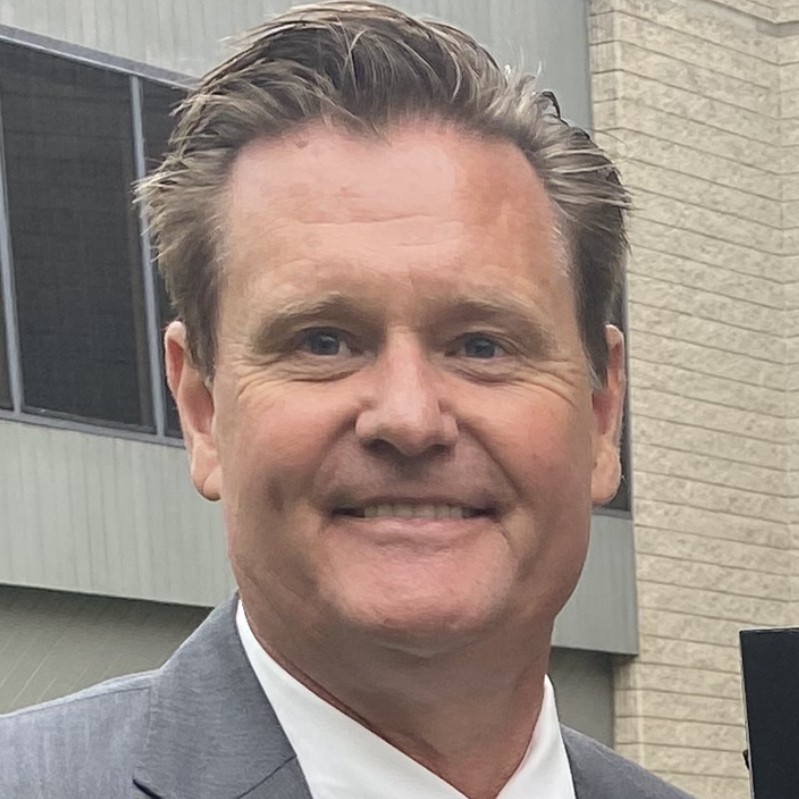
About the Operator
George Howell Ward · Agentic AI Consultant · AZ Real Estate Salesperson SA528635000, Landmark ACM, LLC
An operator who quarterbacks projects of any size with a custom agent stack — real estate, finance, construction, and energy. UC Berkeley B.S. Civil Engineering · Wharton Online REI&A Certificate · completed the Harvard Data Science Review Agentic AI Intensive (June 2026); Certificate of Completion from the Harvard Data Science Initiative, received July 2026. Full bio at georgehowellward.com.
What This Describes. An operating model — a human directing AI agents inside clear boundaries — not a claim that George holds the office of chief executive of any company, nor that an AI should run a company autonomously. George makes no claim to any title, office, role, or license he does not hold. References to the asteroid Apophis are plain-language metaphor, not scientific instruction.
Not Legal, Tax, Financial, or Investment Advice. General professional commentary and education. Consult appropriate licensed professionals for your situation.
Licensure & SEC/FINRA Posture. George is not a licensed attorney, certified public accountant, registered investment adviser, registered broker-dealer, or licensed Professional Engineer. He does not solicit investors and takes no transaction-based or finder compensation. Series 82 is a targeted future credential at approximately 2027 and is NOT currently held. Nothing here is an offer, solicitation, or recommendation of any security or investment.
Arizona Real Estate Disclosure. George Howell Ward, AZ Real Estate Salesperson SA528635000, Landmark ACM, LLC. 5112 N. 40th St., #202, Phoenix, AZ 85018. ADRE License Lookup.
AI-Assistance Disclosure. Some content on this site uses AI-assisted writing tools and was reviewed and finalized by George Howell Ward, who holds editorial responsibility for it, before publication. “Mindware” is a term coined by David Perkins (Outsmarting IQ, 1995).
With gratitude to the Harvard Data Science Review (HDSR) and its board members, and to Next Gen Learning (NGL) — the parties behind the agentic-AI program — and to DAIN Studios (the A.G.E.N.T. framework, by Kruhse-Lehtonen & Hofmann). This work grew out of my class project, The Guardian Angel Project, which sparked my commitment to keeping compliance the cornerstone of how I work and how my AI Compliant Twin faces the world. Mentioned with thanks for inspiration only — this does not imply endorsement by, or affiliation with, any of these organizations.© 2026 George Howell Ward · agenticaiceo.ai